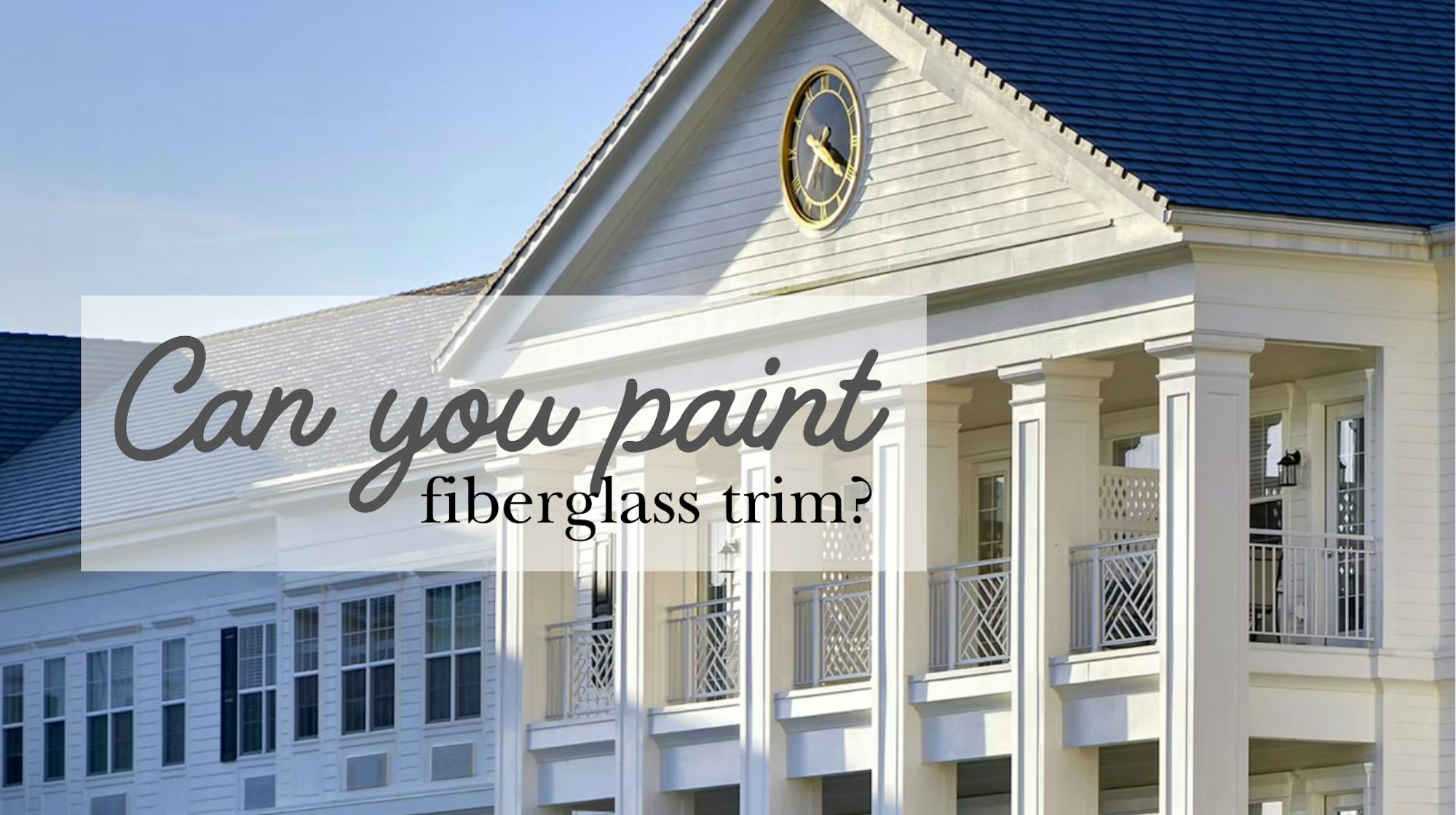
Why paint fiberglass trim?
Painting fiberglass trim can serve several purposes beyond simple aesthetics.
While fiberglass options typically come in white or off-white, applying paint allows for greater customization so the trim can match siding, windows, or other architectural details.
A painted surface also adds an extra layer of protection, helping the trim resist surface dirt, chalking, even though fiberglass itself won’t rot like wood. Paint also helps create consistency across a project. When multiple trim materials are used, finishing fiberglass in the same color ensures a uniform look that ties the overall design together.
Preparing fiberglass trim for paint
The key to success lies in prep. Fiberglass is non-porous, so surface preparation allows the paint to bond properly:
-
Clean thoroughly – Wash the trim with a mild soap-and-water solution or a cleaner formulated for fiberglass to remove dust, dirt, and oils.
-
Lightly sand – Scuff the surface with fine-grit sandpaper (220 grit works well). This breaks the glossy surface, allowing the paint to adhere better.
-
Wipe down – Remove all dust with a tack cloth or damp rag before priming or painting.
Choosing the right paint
For standard fiberglass trim, it’s best to use a high-quality acrylic latex primer if the trim hasn’t been factory-primed, followed by 100% acrylic latex or acrylic urethane exterior paint for a durable finish. Avoid oil-based paints because they don’t bond well to fiberglass and are prone to peeling over time. Both light and dark colors can be used successfully, but darker shades should be approved explicitly for exterior fiberglass applications to prevent heat buildup that may cause surface distortion.
Painting gel-coat fiberglass trim
Gel-coat fiberglass is often associated with the high-gloss finishes seen on boats or bathtubs, but it can also be manufactured with matte finishes. Gel-coat fiberglass is intended to eliminate the need for painting after installation, but if any future painting is desired, extra prep is required. If you want to paint it:
-
Sand more aggressively with a medium grit to dull the gloss and give the primer something to grip.
-
Apply a bonding primer made for slick or glossy surfaces.
-
Stick with exterior-grade acrylic latex or urethane paints for best adhesion and flexibility.
In our opinion, if you’re opting for gel coat, it’s best to select a finish that will withstand the test of time.
Long-term performance
When properly prepped and painted, fiberglass trim is highly durable and holds paint extremely well, often outperforming wood in terms of adhesion and longevity. Maintenance is straightforward. You only need to repaint (or just touch it up) every seven to ten years, depending on weather exposure. It’s also important to review the manufacturer's guidelines before painting, as some warranties require specific preparation steps or approved paints to maintain coverage validity.
What’s right for you?
At the end of the day, fiberglass trim gives you options.
You can paint it for a custom finish that matches your project, or choose gel-coat fiberglass in the color you want right from the start. Both approaches provide a long-lasting, low-maintenance solution that remains sleek for years to come. Explore our Shape Finder tool to see the range of fiberglass profiles and finishes available, and find the option that best fits your next project.