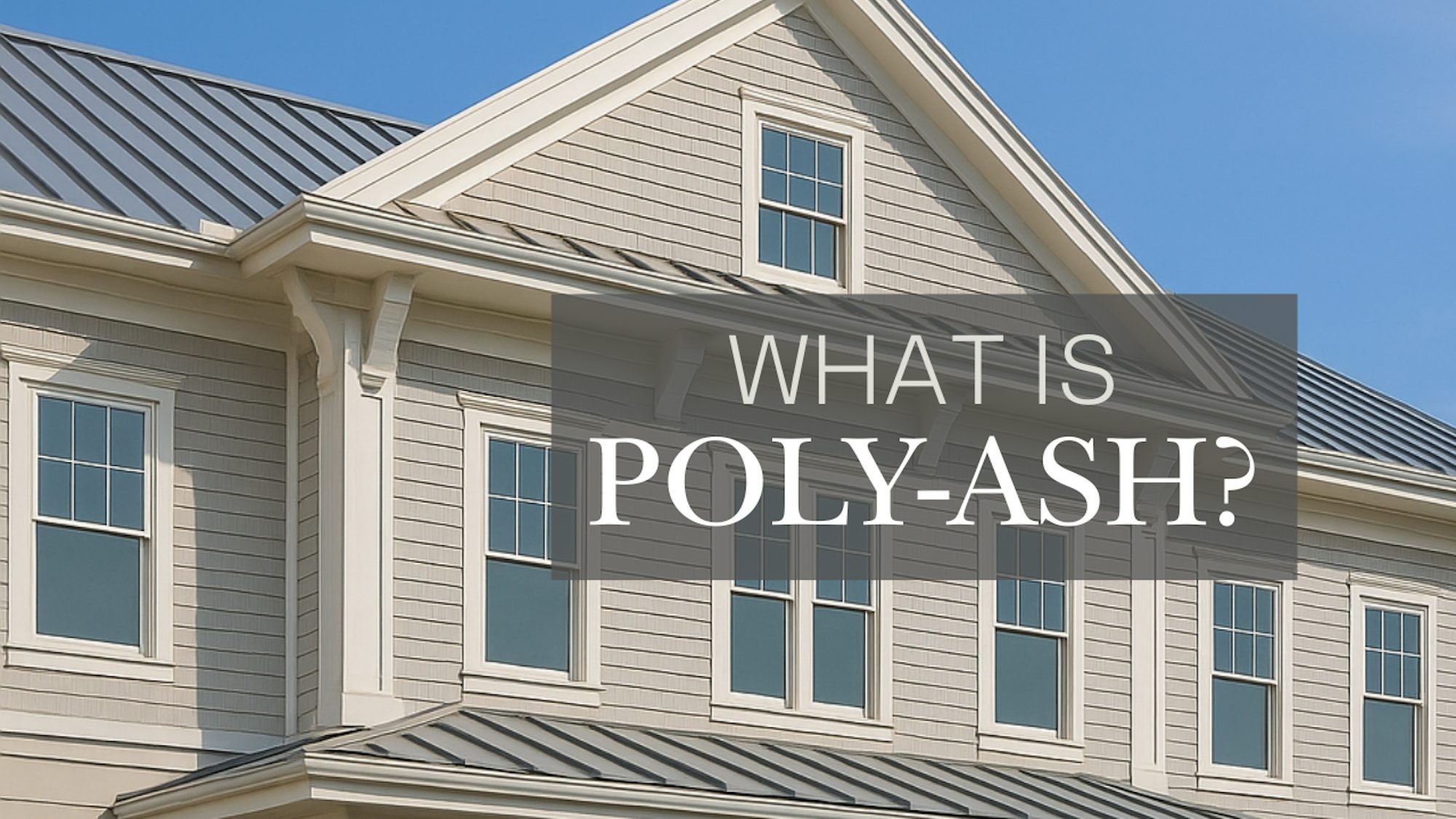
Poly-ash trim is a popular choice for exterior applications. Poly-ash gives you the toughness of a synthetic material with the classic look of wood. Made from a mix of fly ash and polymers, it stands up to moisture, insects, and warping which makes it an excellent pick for harsh climates and upscale architectural projects.
We don’t offer poly-ash in our product lineup, but we know our way around exterior trim and are happy to provide a rundown so that you can decide if poly-ash is the right choice for your upcoming projects.
What is poly-ash trim made of?
Poly-ash trim is a mix of recycled fly ash and polymers. Fly ash is a fine, powdery substance that’s a byproduct of coal combustion in power plants. When combined with polymers, it creates a dense, stable material that resists moisture, rot, and insect damage.
-
Composite of fly ash and polymers, made from sustainable materials
-
Highly durable and dimensionally stable (expansion/contraction typically under 0.25%)
-
Low water absorption (less than 1.5%), ideal for exterior trim
-
Paintable and holds finish well—some brands claim it retains paint twice as long as wood
Poly-ash trim applications
Poly-ash trim is a versatile material commonly used in a wide range of exterior applications, particularly where durability and dimensional stability are crucial. You’ll see it as fascia boards, frieze boards, window, and door surrounds, and decorative trim on porches, columns, and gables. Because of its wood-like appearance and ability to hold paint well, poly-ash works equally well in traditional and modern architectural styles. It's especially well-suited for high-exposure areas like rooflines and entryways, where resistance to moisture and insect damage is critical. While it’s primarily marketed as a trim product, some manufacturers also offer poly-ash in siding profiles, giving builders and homeowners a cohesive, low-maintenance option for exterior cladding.
Who manufactures poly-ash trim?
Two major manufacturers lead the market:
-
TruExterior by Westlake Royal Building Products
-
Boral, an earlier pioneer of poly-ash technology, is now part of Westlake
These brands offer a wide selection of profiles and sizes designed for exterior use.
Poly-ash vs. PVC trim
When choosing exterior trim, poly-ash and PVC are two top-tier options, both offering durability, weather resistance, wood-like appearance, and design flexibility. Still, they differ in ways that affect cost, fabrication, and performance.
We’re going to get quite detailed here, as this is a comparison that we're frequently asked about by many builders and architects.
Material makeup
-
Poly-ash is made from a dense blend of recycled fly ash and polymers, giving it exceptional dimensional stability and a solid, wood-like feel.
-
PVC trim is manufactured from expanded polyvinyl chloride, resulting in a lighter-weight, non-porous material that’s impervious to moisture and easy to fabricate.
Appearance
Both materials are designed to mimic painted wood and are available in smooth or woodgrain textures. Visually, it’s often difficult to distinguish between the two when installed and painted.
Thermal Stability
-
Poly-ash’s standout feature is its exceptional dimensional stability. With minimal expansion and contraction, it’s ideal for long, uninterrupted trim runs or areas where joint movement would be highly visible.
-
PVC expands and contracts more with temperature swings; installers should allow about one-sixteenth to one-eighth of an inch of movement per eighteen feet and use proper fastening techniques to minimize gaps and shifting. With appropriate installation using manufacturer-recommended spacing, adhesives, and fasteners, movement can be effectively managed in most architectural applications, so this is typically not a deciding factor when it comes down to it.
Workability and fabrication
-
Poly-ash is denser and more abrasive, which leads to faster blade wear and increased tooling costs—it requires careful handling due to its weight and brittleness. Poly-ash trim boards typically require two people to carry because poly-ash can snap under its own weight if not appropriately supported. These limitations are more likely to affect fabricators and installers than architects or specifiers, but they often factor heavily into project planning.
-
PVC is often easier to work with. It’s lightweight, forgiving during installation, and machines cleanly without causing significant wear on blades or CNC equipment. For projects that require milling, custom profiles, or detailed fabrication, PVC is the more wood-like option in terms of tool handling and installation speed.
Paintability
-
Poly-ash must be painted to maintain its warranty. Fortunately, it holds paint exceptionally well (even dark colors) and the material’s stability helps prevent peeling, cracking, and fading over time.
-
PVC comes prefinished in white, and it’s highly recommended to paint it. Light colors are recommended unless a solar-reflective formula is used to prevent heat distortion on dark finishes.
Durability and performance
Both materials resist rot, insects, and moisture. PVC is also flame-retardant and easy to clean, with no sealing or maintenance required. Poly-ash is especially well-suited to coastal or high-moisture environments where long-term performance is critical.
Sustainability
-
Poly-ash includes over 70% recycled material, largely composed of fly ash—a byproduct that would otherwise be sent to landfills.
-
PVC’s post-use recyclability is limited, but many manufacturers (like AZEK) now incorporate significant amounts of recycled content into their trim boards, with some products averaging 30-60% recycled material, but up to 85% recycled materials. While the overall environmental impact varies by product line and brand, both materials contribute to landfill reduction in different ways.
Cost and practical considerations
-
Poly-ash trim is regarded as a premium material thanks to its dimensional stability and resistance to moisture and insects. Typically, poly-ash is priced higher than many traditional and composite trim options (though, depending on region and supplier, it may be more or less expensive than certain brands of PVC trim). Poly-ash is a solid pick for spots that need tough, stable trim, especially where it touches the ground or faces a lot of moisture. Just keep in mind that it’s heavier, a bit harder to work with, and usually requires painting to maintain the warranty.
-
PVC trim, on the other hand, is widely chosen for its fabrication ease, flexibility, and resistance to rot or insects. Although PVC can expand and contract with temperature changes, proper installation usually keeps this under control. That makes PVC an affordable, practical choice for decorative brackets, column wraps, and other trim where movement isn’t a big issue and easy installation matters.
Ultimately, the best choice depends on specific project needs, local pricing, and installation requirements, rather than a clear advantage of one material over the other.
Poly-ash vs fiber cement
Poly-ash and fiber cement trims both deliver durability and resistance to rot and insects, but their installation, handling, and finish options set them apart.
Installation and Workability
-
Fiber cement is heavier and more brittle, which means it can crack if mishandled. Cutting it generates silica dust, so installers need specialized blades and must wear protective gear, including respirators, to avoid health risks.
-
Poly-ash installs more like wood compared to fiber cement. It’s easier to cut, shape, and fasten using standard woodworking tools than fiber cement, with no need for special blades or dust controls. The boards are dense but less likely to break or chip during handling.
Finish and Paint
-
Fiber cement is often available with factory-applied finishes in a wide range of colors. These finishes are applied under controlled conditions for long-lasting color, but if you opt for field painting, it typically needs repainting every 10 to 15 years.
-
Poly-ash needs to be painted to maintain its warranty. It holds paint exceptionally well (any color can be used, including dark shades), and paint tends to last longer due to the material’s stability and low moisture absorption.
Design Flexibility
-
Fiber cement trim is more limited in terms of custom milling and shaping due to its brittleness. It’s available in standard profiles and lengths, but not as easily customized on-site.
-
Poly-ash can be milled and routed for custom profiles and detailed trim work, making it a flexible option for unique designs or restoration projects.
Safety and Handling
-
Fiber cement requires dust collection systems or wet-cutting methods to control silica exposure. Safety protocols are essential to protect installers from respiratory hazards.
-
Poly-ash produces nuisance dust when cut, but it does not contain silica, so standard dust masks and basic PPE are sufficient.
Both materials are durable and low maintenance, but poly-ash offers comparatively easier installation and customization. At the same time, fiber cement provides more factory color options and requires stricter safety measures during installation.
Poly-ash vs. wood trim
Durability and Maintenance
-
Poly-ash trim will not rot, warp, or crack, even in high-moisture or ground-contact applications. Its resistance to insects and decay means you avoid the common issues that plague wood trim over time.
-
Wood trim offers natural grain and character, but it’s prone to rot, warping, and cracking if not properly maintained. It will need regular sealing, painting, or staining to protect it from the elements and pests.
Appearance and Workability
-
Poly-ash closely mimics the look and feel of painted wood, with options for smooth or wood-grain surfaces. It can be cut, milled, and fastened using standard woodworking tools, allowing for custom profiles and detailed trim work.
-
Wood provides authentic grain and a classic appearance, but you’ll need to sort through boards for straightness and consistency. It’s also more limited in terms of long-term stability.
Lifetime Value
-
Poly-ash trim holds paint exceptionally well, with fewer issues from expansion or contraction. You can use any color, including dark shades, and paint tends to last longer, reducing the need for frequent touch-ups or repainting.
-
Wood trim requires ongoing maintenance. Expect to repaint or reseal every few years to keep it looking good and to prevent damage. Over time, this adds to labor and material costs.
Is poly-ash trim a good fit for your project?
Poly-ash is ideal for builders and homeowners seeking a durable, stable, and low-maintenance trim option that resembles wood. It performs exceptionally well in wet or coastal environments and is a smart alternative to wood, PVC, or fiber cement for a range of exterior applications.
However, in applications where dimensional stability is not a concern or can easily be mitigated, the workability and cost-effectiveness of alternative materials can outweigh the benefits of using poly-ash.
Decoro doesn’t currently offer poly-ash trim, but we’re happy to help you learn about alternatives that could be a durable and cost-effective option for your next project. Contact us today.