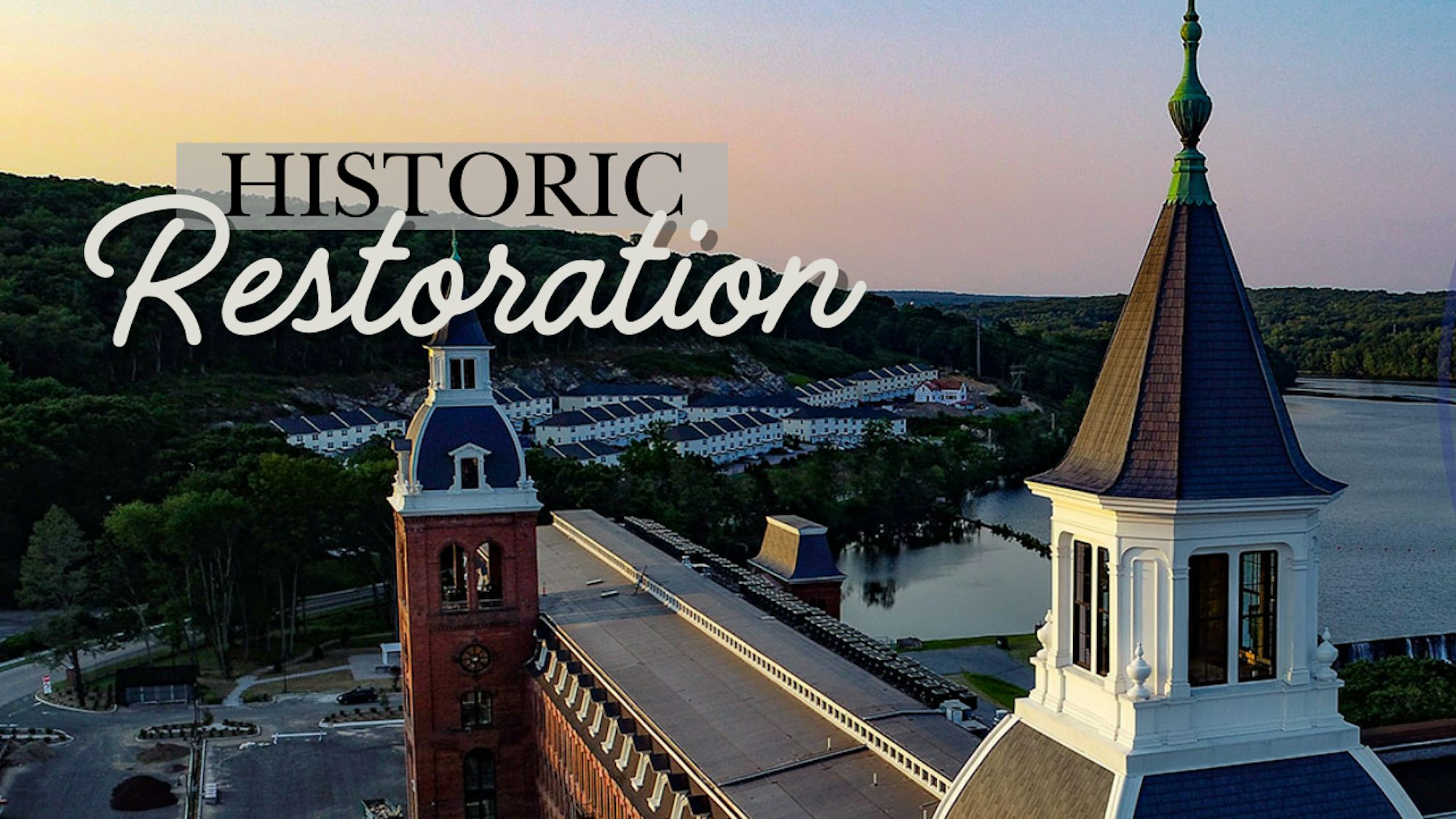
Modern restoration isn’t about erasing history. It’s about extending it. With advanced materials like fiberglass, GFRC, polyurethane, and cellular PVC, today’s craftsmen can preserve architectural authenticity while giving buildings the durability to stand for another century.
Why modern materials matter in historic restoration
Historic restoration projects have to balance aesthetics with longevity. Original materials were chosen for beauty, not necessarily for resistance to decades of moisture, UV exposure, or freeze-thaw cycles. And at that point, modern materials simply didn’t exist. If they had, builders may have chosen them. After all, those Victorians were all about the latest and greatest when it came to buildings.
Modern composite materials now give architects and restoration experts the best of both worlds: historically accurate details that won’t rot, crack, or crumble. From courthouse facades to university colonnades, these advanced materials maintain a building’s character while reducing maintenance and repair cycles.
Put simply, modern materials don’t replace craftsmanship; they protect it.
The challenges of preserving historic architecture
Restoration is rarely as simple as replacing worn-out parts. Restoration often means recreating detailed designs, strengthening old materials (without adding too much weight), and meeting strict preservation standards. Combine that with tight budgets and long schedules, and it’s clear—historic restoration takes patience, precision, and authentic craftsmanship.
Materials with historic looks and modern advantages
People think historic preservations require using materials of the past. And while those materials can absolutely be used (and in some cases are required), modern materials can offer the same look with better benefits.
Fiberglass (FRP)
Fiberglass is lightweight and strong, making it ideal for large-scale elements such as columns, domes, and entablatures. Fiberglass can capture intricate details and can be painted or pigmented to match original finishes. Because it resists moisture and corrosion, fiberglass is great in coastal restorations or tall façades where weight and maintenance are critical concerns.
GFRC (Glass Fiber Reinforced Concrete)
For restorations requiring the look and heft of stone, GFRC delivers. It’s a composite of concrete and glass fibers that offers the texture of masonry with a fraction of the weight. GFRC is often used on civic buildings, museums, and historic courthouses where stone replication is essential but full-scale stone replacement would be cost-prohibitive.
Cellular PVC
PVC trim is a favorite for replicating wood millwork, especially in cornices, brackets, and window surrounds. It can be milled, painted, and finished like traditional wood but won’t rot, warp, or split. For projects restoring classic residential or institutional architecture, PVC provides that clean, crisp detail that lasts decades with minimal upkeep.
High-density polyurethane
This material is often found in smaller details: balustrades, scrollwork, brackets, and moldings. It’s lightweight, easy to install, and available in smooth or woodgrain finishes. Polyurethane reproduces the craftsmanship of carved wood while resisting the elements that destroy it.
Molded limestone and aluminum
When projects call for material authenticity or regional matching, molded limestone and aluminum can provide either traditional weight or long-term strength. These materials are especially common in institutional or government restoration work where longevity and durability are paramount.
Decoro has used combinations of these materials in projects from historic Lofts at Ponemah Mills to the University of Alabama, proving that modern fabrication can coexist beautifully with timeless design.
Modern fabrication keeps history alive
Technology has completely changed the restoration process. With digital scanning, craftsmen can capture original ornamentation down to the millimeter. CNC machining and mold casting then reproduce these details in modern materials with stunning accuracy.
This precision allows for the creation of exact replicas of deteriorated pieces (brackets, cornices, or even entire façades) without disturbing the building’s historic integrity. Prefabricated components also minimize on-site time, which is especially valuable in high-traffic or delicate environments such as courthouses, museums, or government buildings.
Balancing authenticity and performance
Every historic restoration has a tension point: authenticity versus longevity. Preservation boards often require strict adherence to original designs, but modern materials can make those designs perform better than ever.
Fiberglass and GFRC can be textured to mimic aged stone or plaster. Cellular PVC and polyurethane can replicate wood carvings so closely that even experts have to touch them to tell the difference. These materials don’t just imitate—they enhance, allowing restorers to meet historical accuracy standards while reducing the risk of future decay.
Restoration, after all, isn’t about keeping things the same. It’s about ensuring they endure.
Choosing the right material for the job
Each restoration calls for its own material strategy.
-
Fiberglass or GFRC for columns, cornices, and large-scale architectural components.
-
PVC or polyurethane for detailed millwork, trim, and brackets.
-
Aluminum or molded limestone for heavy-duty or specialized regional restoration projects.
Preserving history, building the future
Modern restoration materials don’t discount the beauty of historic elements. These materials seamlessly blend into historic buildings (you wouldn’t be able to tell them apart by sight alone) while providing long-term strength and reliability. They help protect intricate details, reduce upkeep, and keep a building’s original character intact for decades.
If you’re planning a restoration project or specifying details for a historic building, explore Decoro’s ShapeFinder tool to see the full range of available materials and profiles that bring classic craftsmanship into the modern era. And if you’re looking for a specific profile, we can help with that too. Contact us to learn how we can help with your next restoration project.