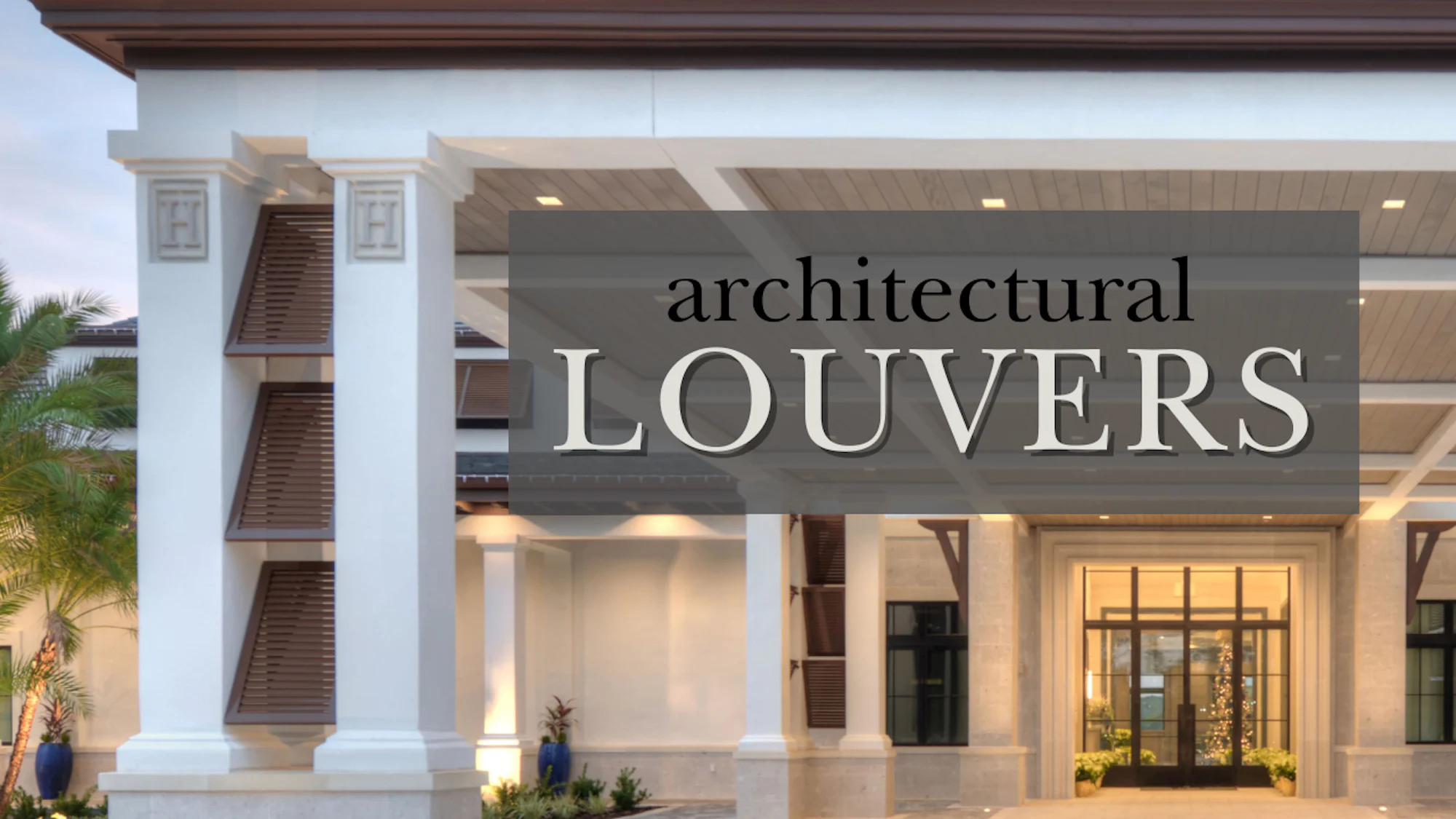
Architectural louvers are a familiar sight on gables, dormers, cupolas, and upper façades, but many people don’t realize just how versatile these elements can be. They add visual interest, break up large wall planes, and reinforce architectural style. In some designs, louvers provide ventilation, though many modern versions are strictly decorative. Louvers help define a project’s character while offering options for shape, scale, and material.
What is an architectural louver?
A louver is a trim element designed with slats or a slatted appearance. Traditionally, louvers allowed air movement in attics or tower spaces, keeping buildings cooler and reducing moisture buildup. Today, they are often used decoratively to reinforce symmetry, emphasize gable peaks, or create a focal point on a façade. Modern louvers come in many shapes, materials, and levels of detail, making them adaptable to both classic and contemporary architecture.
Common louver shapes and where they’re used
Louver shape influences both the look and the architectural style of a building. Decoro manufactures a broad selection of shapes so designers and builders can match existing details or create a specific visual theme.
-
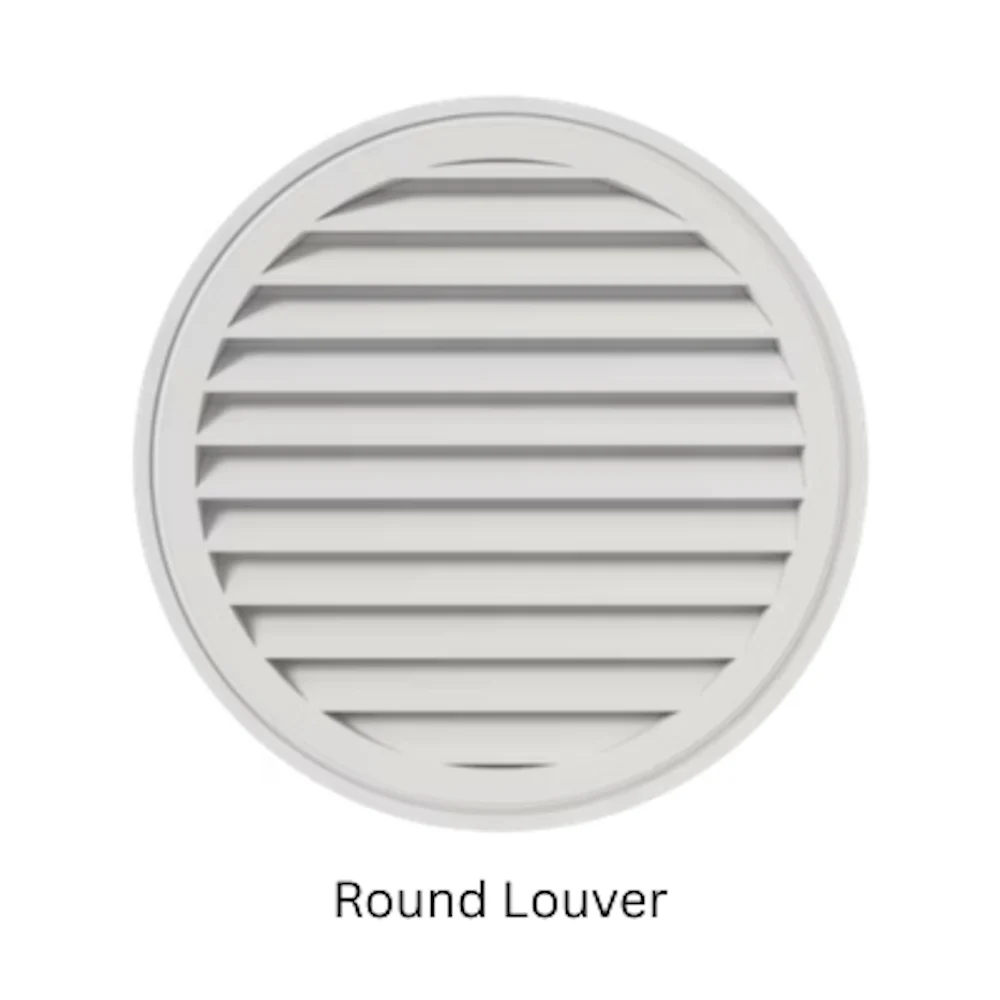
Round and oval shapes often appear in Colonial, Georgian, and Federal-style structures. They soften angular rooflines and add a balanced touch to a gable. Oval keystone styles introduce a slightly more formal look.
-
Rectangular louvers are the most versatile. They work in nearly any architectural style, from coastal builds to commercial façades. Some include multi-pane or crossbuck-style layouts, which can complement farmhouses, Craftsman homes, or rural-inspired commercial developments.
-
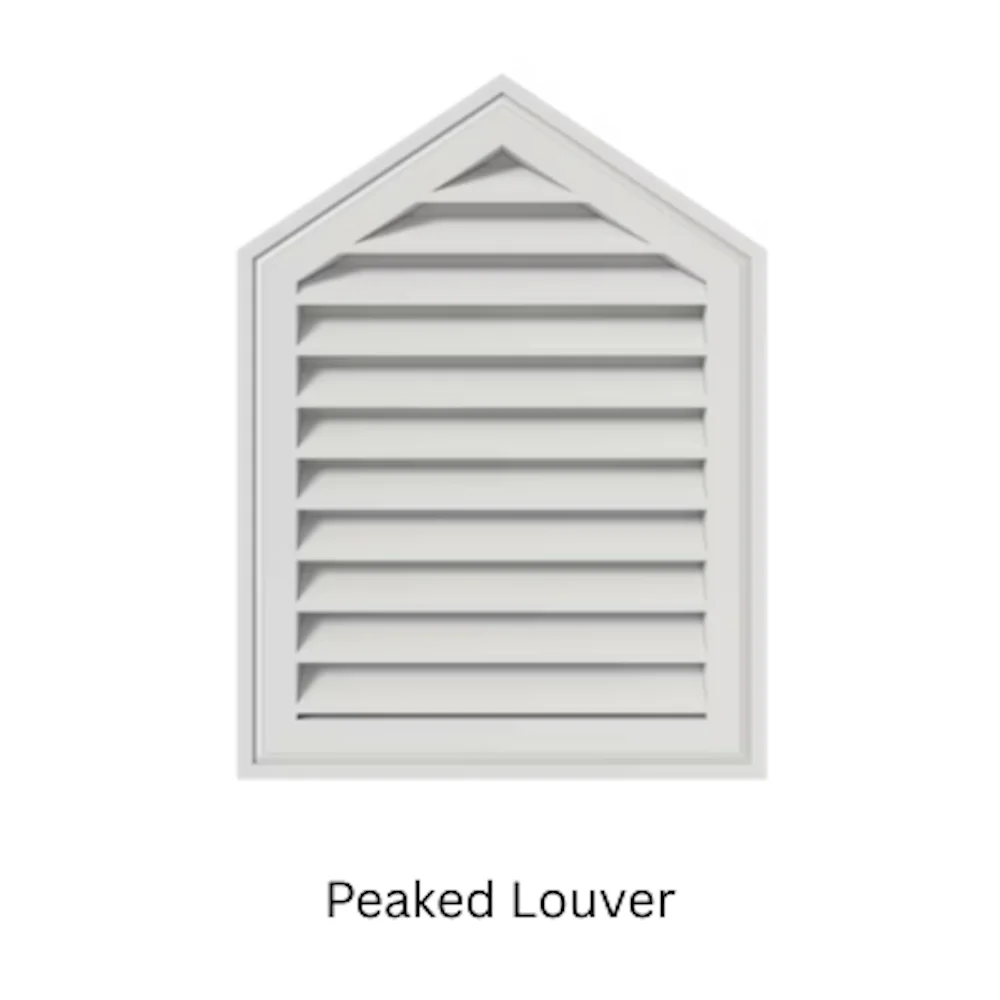
Triangular and peaked louvers bring strong directional lines to a design and often appear in steep-gabled homes, A-frames, or mountain architecture.
-
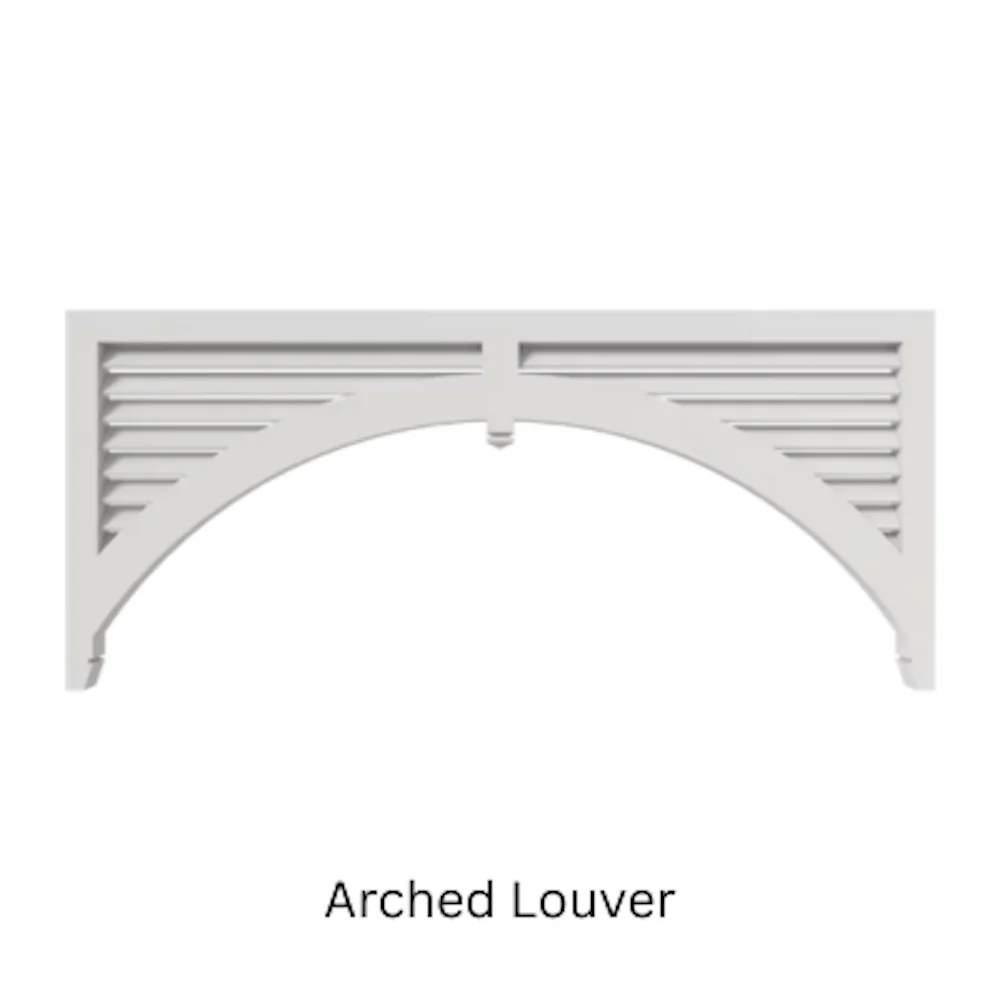
Arched louvers introduce a more refined profile. These range from gentle curves to deep, dramatic arches and are common in luxury residential projects, universities, and municipal buildings where a softer architectural expression is preferred.
Decoro’s available shapes
Round, round keystone, oval keystone, triangular, peaked, circle top, eyebrow, multiple rectangular variations, and several Arched profiles. This variety gives plenty of flexibility when matching existing architecture or designing a new build with intentional character.
Anatomy of a louver
Although louvers vary in appearance, most share a few core components.
-
The slats or blades create the familiar louvered look. On decorative louvers, these are usually fixed and do not allow airflow.
-
The frame sets the outer shape. Depending on the profile, this can be perfectly round, arched, sharply peaked, or rectangular.
-
The keystone is an optional accent found on some round or oval louvers. It adds a classical touch and draws the eye.
-
The backer, when included, ensures the louver reads as a purely aesthetic feature rather than an open vent.
Materials used for architectural louvers
Louvers were once made almost exclusively from wood. Now, most high-performance louvers are built from composite materials that offer greater longevity with far less maintenance. Decoro manufactures louvers in cellular PVC, polyurethane, fiberglass, and GFRC.
-
PVC louvers are lightweight, low-maintenance, and easy to install. They hold up well in coastal or high-moisture environments.
-
Polyurethane louvers are well-suited for detailed profiles and are popular when sharp edges or ornate shapes are required.
-
Fiberglass louvers offer high strength without significant weight and are frequently used on commercial or institutional projects where durability is essential.
-
GFRC is ideal for large-scale louvers on civic buildings or masonry projects, especially when long-term dimensional stability and impact resistance are priorities.
Because louvers sit high on a façade and are exposed to the elements, the right material ensures both long-term performance and minimal upkeep.
How louvers are used in architectural design
Louvers serve different roles depending on the project. On residential buildings, they often highlight gable ends or dormers, add balance to rooflines, or help reinforce symmetry on a façade. In commercial or institutional projects, louvers contribute to overall rhythm and scale while offering opportunities for distinctive design moments.
In historic restoration projects, architectural louvers often serve a dual purpose. They’re used to restore original ventilation openings while preserving the building’s historic character. When original wood or metal louvers have deteriorated beyond repair, modern materials allow teams to replicate the original shape, proportions, and shadow lines without introducing excessive weight or ongoing maintenance concerns. This makes louvers a practical solution for meeting preservation requirements while improving long-term performance.
Even when purely decorative, louvers contribute to architectural storytelling. A round louver might echo classical proportions, while a triangular one emphasizes the geometry of a steep roofline. Arched louvers can soften a façade or introduce a sense of formality. Because louvers come in so many shapes and sizes, they allow architects and builders to fine-tune a building’s personality without altering major structural elements.
Selecting the right louver for your project
Choosing a louver starts with understanding how it supports the design. The roofline geometry, architectural style, material palette, and scale of the building all influence which shape works best. Durability and maintenance expectations also factor in. A fiberglass louver may be the right fit for a high-traffic commercial environment, while PVC might be the most practical option for coastal homes or multi-building developments where long-term upkeep matters.
Decoro’s louvers can be manufactured in multiple shapes, materials, and finishes, making it possible to match both performance needs and aesthetic goals. Because every project is different, size adjustments and custom configurations are also available when needed.
Explore louver shapes with Decoro’s Shape Finder
If you’re in the early stages of specifying louvers or comparing shapes for a project, Decoro’s Shape Finder tool makes it easy to browse available styles and narrow down the right fit. With a full range of round, rectangular, peaked, arched, and keystone-accented profiles, you can quickly explore options and find a louver that complements your design.